Showing posts with label life-threatening illness. Show all posts

The Hiding Place by Corrie ten Boom


The Hiding Place, written by Corrie ten Boom, is a true story about the author's experiences during the holocaust. Corrie ten Boom was a leader in the Underground. With the help of her family, she kept many Jews safe from the Nazis. However, she was eventually caught, and along with her family, thrown into prison and a concentration camp.


This inspirational story is about how Corrie found faith and held onto it for dear life. She witnessed many miracles, but the greatest miracle to me, is that Corrie and her sister, Betsie, were able to maintain such a positive outlook because of their unwavering faith in God. I mean, Betsie prays IN GRATITUDE for the fleas in the bunker, which do, amazingly enough, turn out to have a good purpose.


Here is a brief excerpt:

"Corrie Ten Boom stood naked with her older sister Betsie, watching a concentration camp matron beating a prisoner. "Oh, the poor woman," Corrie cried. "Yes. May God forgive her," Betsie replied. And, once again, Corrie realized that it was for the souls of the brutal Nazi guards that her sister prayed."

The Hiding Place is a life-changing classic. It is a quick read. Although it is about the holocaust, it is not deeply depressing but enlightening. I hope you enjoy it! It is one of the best books I have ever read.

The above review was published on this blog in 2008.

Grace's Note, 2019: What an incredible book. I'm 13 and I loved it. Have your kids read it! It's informational about WWII and uplifting.

Book Review : Heaven is Here by Stephanie Nielson

Have you heard of the Fabulous Mrs. Stephanie Nielson of Nie Nie Dialogues fame? Of course you have...or if you haven't, it's time to find out about this amazing and lovely woman.

Did you know that she recently released a book? Well, it's every bit as wonderful as you expect it to be.

Heaven Is Here: An Incredible Story of Hope, Triumph, and Everyday Joy by Stephanie Nielson

Stephanie Aurora Nielson had a fairy-tale life befitting her fairy-tale name and good looks. You know, like "lips to shame the red-red rose" and all that. It was the life she had always dreamed of...the life she imagined through her paper dolls until well past the age when most girls stopped playing paper dolls anymore.

And she was happy. She blogged up her happy life, reveling in the beauty of day-to-day life as a wife and mother.

Mr. Christian Nielson was also following his dreams. He was learning to fly.

But disaster struck. Along with their friend/flight instructor, Doug, they were in a terrible crash. Stephanie came out with burns on 80% of her body, Christian came out a little better off but still badly injured, and Doug didn't come out at all.

Stephanie was in a drug-induced coma for three months. When she awoke, she didn't want to see anyone. At times, she lost all hope and believed she could never be happy again.

But gradually, as she learned to sit up again, and then stand and walk, her personality shone through, and she realized that she still had everything she ever wanted...her family and her faith.

She talks about her life as a member of The Church of Jesus Christ of Latter-day Saints aka Mormons, which I also belong to. This book is a very non-threatening way to find out a little bit about that. It's not written in a preachy way. It's just part of her life (as it is mine).

I enjoy Stephanie Nielson's blog and have read it off and on for several years. I LOVED this book, though. It is about hope, love, joy, faith, and the importance of family. Stephanie shows us how, even in the midst of sore trials, we can find joy in the simple things that matter most (even laundry!)

I highly recommend Heaven is Here to adults and young adults. So inspiring.

Uncle Tom's Cabin by Harriet Beecher Stowe


Uncle Tom's CabinUncle Tom's Cabin by Harriet Beecher Stowe

It is rumored that Abraham Lincoln met Harriet Beecher Stowe at the beginning of the Civil War and said, "So this is the little lady who started this great war."

Despite changing the course of America's history, this is a book many people have heard of, but far fewer have read.

Well-drawn characters are interwoven in a web of stories that portray life in the slave states. Through unimaginable trials, most of the slaves in the story buckle under pressure and lose hope. However, some stay strong and true to their Christian faith.

Uncle Tom is a strong character who looks to God for guidance. When all the other slaves buckle under the pressure of a tyrannical slave-owner, he stands strong in his faith and doesn't budge.

What a beautiful example of true Christianity! Tom realizes that no matter what is done to him on Earth, he will be rewarded in Heaven for sticking to his morals and his God.

Well-written, although definitely written with an anti-slavery slant that sometimes comes before the story itself, this book instantly rose to be on my list of most wonderful, life-changing, powerful books.

I highlighted a few parts of this classic as I read. One sentence that struck me was this: "It's pretty generally understood that men don't aspire after the absolute right, but only to do about as well as the rest of the world." This is only too true. How often do we do things just because it is commonly accepted? Whether or not they are right?

Highly recommended for teens and adults.


Stone Fox by John Reynolds Gardiner

Stone FoxBook Review: Stone Fox by John Reynolds Gardiner

I read this book aloud to my kids today, and let me tell you. I was a blubbering fool. I used to roll my eyes and laugh when my mom cried at emotional stories. Now I'm her.

Except this time, Bubs (nearly 7) wasn't rolling his eyes. He was crying, too.

Are you familiar with this very short chapter book? Here's a brief overview:

Little Willy may only be ten, but that doesn't mean he can't run a potato farm. His grandfather has become very ill. Willy is determined to make everything better by harvesting the potato crop.

When that doesn't help matters, Willy discovers a debt that his grandfather owes for $500.

Against all odds, Willy enters a dog-sled race, where he'll compete against the best racers in the country, including the huge Indian, Stone Fox, who has never lost a race.

Will his determination and courage be enough?

As mentioned, this book is a tear-jerker. However, it spurred great conversation (great enough to make me forget I had an appointment...), and I'm glad we read it together.

Palace Beautiful by Sarah DeFord Williams

Palace Beautiful
Palace Beautiful by Sarah DeFord Williams
Book Review by Emily

When Sadie's family moves to Salt Lake City, she discovers a secret room in the attic with a painted sign that says "Palace Beautiful". Inside, she and her new friend, Bella, find the diary of a girl who lived during the flu epidemic of 1918. When the journal ends suddenly, they find themselves caught up in the mystery. Did the girl die of the flu? Is she still alive? Did she lose the people she loved?

Meanwhile, Sadie's stepmom is pregnant, and since her mom died in childbearing, Sadie is afraid.

Palace Beautiful is...well, beautiful. It's a tale of mystery, history, friendship, death, family relationships, and growing up. The best part is this...the characters. Every character is so well-developed that you feel like you are their friend. I particularly got a kick out of Sadie's dramatic friend, Belladona Desolation, known as Bella. I also enjoyed Sadie's unusual color descriptions.

In full disclosure, Sarah Williams is a friend of mine. I actually did some critiquing for her on this story. That said, I know I didn't just love this book because I love Sarah. It. Is. Amazing. (Go Sarah!!!)

I recommend it for kids and up who know where babies come from (or who you're ready to have that talk with), because Sadie makes mention about how embarrassed she was when she found out where babies came from. There is also a little bit of romance. A very little bit, but Bella does kiss a neighbor boy.

People who enjoyed Shug by Jenny Han or A Crooked Kind of Perfect by Linda Urban are sure to like Palace Beautiful.

Book Review: Comfort by Joyce Moyer Hostetter


Review by Me.


I have come to a conclusion. Joyce Moyer Hostetter is an amazing writer. She brings history to life by developing intriguing characters and slapping them into poignant time periods. I admit that this book took me a while to pull off the shelf. I didn't realize it was a sequel to a book I already knew and loved. When I finally picked this book up, I was pleasantly surprised and hooked from chapter one.


I look forward to sharing Hostetter's historical fiction with my children as they grow a little older.


Comfort is the sequel to Blue. I thoroughly enjoyed Blue and its heroine, Ann Fay Honeycutt. In Comfort, WWII has ended. Her father has come from the war, but he is a changed man. Ann Fay is recovering from polio. She had thought that when the war was over and her father was home, everything would fit perfectly back together. But war changed her life for good.


This is a story of courage and healing, of forgiveness and friendship, and of growing up.


Blue and Comfort would be perfect for homeschoolers who are middle-school aged. I also enjoyed Healing Water by Joyce Moyer Hostetter. You can see that review here.


PS...Illnesses and a complete computer reboot (that has stolen all my pictures for the time being) are causing a bit of blog-slacking. See you soon.

Healing Water by Joyce Moyer Hostetter


Pia follows Kamaka everywhere and regards him like a father. He can't imagine anything that would separate them...but life has a way of throwing the unexpected at us.
When Pia is diagnosed with leprosy, his country exiles him to the leprosy settlement on Moloka'i. He has to leave his family, but what hurts most, is the complete abandonment he feels from Kamaka.
Pia is filled with anger and loneliness as he struggles to survive in the primitive settlement on Moloka'i.
He discovers the importance of friendship, forgiveness, and aloha.
This is the second book I have read by Joyce Moyer Hostetter. Both have been historical fiction and both have been amazing. I am not a huge fan of historical fiction, but Hostetter has a way of bringing it to life. She puts the story first. The lead characters in Healing Water and Blue both captured my heart and kept me turning pages.
You can see an interview with Joyce Moyer Hostetter here.

Understood Betsy by Dorothy Canfield Fisher


Fisher, Dorothy Canfield. 1917. Understood Betsy.

Review by Becky Laney, frequent contributor.


When this story begins, Elizabeth Ann, who is the heroine of it, was a little girl of nine, who lived with her Great-aunt Harriet in a medium-sized city in a medium-sized state in the middle of this country; and that's all you need to know about the place, for it's not the important thing in the story; and anyhow you know all about it because it was probably very much like the place you live in yourself.


Elizabeth Ann is an orphan raised by her great-aunt Harriet and her aunt Frances. The first chapter shows the reader just how life as she knew it was for Elizabeth Ann. To say she was coddled would be a bit of an understatement. To say that both aunts and niece were a bit psychologically unsound would be a bit closer to the truth. It's not that they're crazy crazy. It's just that they're anxious, jittery, nervous, worrisome, panicky, fidgety, chicken-little-y type people. They're sweet and docile enough, but they lack gumption and ingenuity and vitality.


Understood Betsy is the story of how Elizabeth Ann transforms into Betsy. It all starts when one of her caretakers gets diagnosed with an unnamed disease. (If they named it, I sure missed it. But I think the main point was to get the two aunts out of the picture.) Elizabeth Ann is sent to live with the other side of the family. Her aunt (Abigail) and uncle (Henry) and first cousin (Ann). They live in Vermont, I believe.


From the very beginning, Elizabeth Ann knew that she was entering the unknown. On her way to her new home--in the buggy--she has her first enlightened moment. "It is possible that what stirred inside her head at that moment was her brain, waking up. She was nine years old, and she was in the third-A grade at school, but that was the very first time she had ever had a whole thought of her very own." (21)


Her awakening, her transformation is entertaining enough and the descriptions of life and family are charming as well. I think some readers will love Betsy, understand Betsy; but I'd be silly if I didn't acknowledge the fact that some readers would find Understood Betsy to be boring or quaint. Anyway, long story short...I loved it. I thought it was great. If I had discovered this as a child--like my mother did and most likely my grandmother did--I'm sure I would have loved it. I'm sure I would have read it over and over again.


You can find the entire book--including illustrations--online.

THE WONDER KID by George Harrar


Review by Joyce Moyer Hostetter
http://www.joycemoyerhostetter.com/


The Wonder Kid is one that I like to recommend when I speak to school groups about polio. It’s a lovely little book. Such a great size and so kid friendly with its comic strip feel. It is the story of Jesse MacLean who faced some serious life changing things one summer. As Jesse puts it:

Summer is when you’re supposed to have all sorts of fun, like one long recess…
Well, 1954, when Gramps moved in with us, was the summer of no fun—and it was all because of polio.

1954 was also the year that Jonas Salk conducted his field trial for the polio vaccine and one year later he announced the vaccine’s success. Meanwhile parents were deathly afraid for their children’s health and Jesse’s mom was no exception. So she kept him in the house as much as possible – no swimming whatsoever and only one trip alone to the picture show. Jesse spent his time drawing, visiting with his Gramps, and imagining himself strong like Charles Atlas.

Then grief strikes Jesse and polio does too. He feels weaker than ever. But in some ways he is just finding his own strength.

This story is about much more than polio. It is about relationships and how they carry us through difficult times, how the smallest things we say have a lasting impact on others, and how people who seem really tough on the outside may actually feel as vulnerable as we do on the inside.

Jesse shares this story in first person. His voice is “easy listening” – not in the relaxing sense of the word; there are some disturbing things in his story. But he shares them with humor and honesty and the reader cares about him right away.

The author note at the end is a really good overview of polio history.

Oh, and I loved this word of wisdom from Jesse MacLean:

Sometimes when a mean thought goes through your head, it’s better to zip your mouth closed.

TRUDY by Jessica Lee Anderson


Review by Allana, regular contributor.


Gertrude "Trudy" White is a sixth grade girl who was a miracle baby. Her mother or to Trudy "Ma" had her at 53. What originally was thought to be a cancer scare, turned out to be Trudy herself. Now in Trudy's sixth grade year, people are beginning to think that Trudy's parents are her grandparents instead. Even though Trudy is extremely gifted in Language Arts, she is struggling to keep her math grade up. Then she meet's Roshonda nicknamed "Tower" and they hit it off quickly. But at the same time that Trudy and Roshanda become friends, Trudy's father who is also known as "Pop" starts to act strangely. After several unusual instances occur, Pop is finally diagnosed with Alzheimer's.


This is the story of how one family is affected by the disease and how they deal with it. This book makes you think about what it would be like to be just moments away from losing a loved one. This book is a must read for all ages and I loved it! I hope you will too!


Recommended Age Group: Tween-Adult

Blue by Joyce Moyer Hostetter AND an Interview


Review by me, Emily


So, here's the deal. I had no idea such a Writing Superstar had joined us at Clean Reads. Joyce Moyer Hostetter recently joined in as a regular contributor. (Her reviews so far can be found here.) She also sent me a copy of her book, BLUE. Now, I get a lot of books for review. Sometimes I love them. Sometimes they don't really resonate with me for one reason or another. BLUE is one of those books that took me by surprise (because it was so wonderful) and shook me to the core. I laughed. I cried. And you know what? It doesn't even have any fantasy elements in it. My favorite books are almost always fantasy. This is a book about Ann Fay Honeycutt, and what it was like to be a young teen in the forties. Wow.


Here's the description from the jacket flap:


"When her daddy is sent off to fight Hitler, Ann Fay Honeycutt puts on the blue overalls he has given her. Now, at thirteen, she's the "man of the house," in charge of tending the large vegetable garden and watching out for her younger sisters and brother. It's hard work, but Ann Fay is managing until a polio epidemic strikes. At first she relies on the newspaper for information about the disease, but all too soon she knows its devastating effects firsthand. As the challenges grow, Ann Fay's resourcefulness and toughness grow as well."


When I finished reading BLUE, I wasn't ready for the experience to end, so I asked Joyce Moyer Hostetter some questions about it.


Me: How did you get into writing?
Joyce: My 7th & 8th grade language arts teacher first told me I am a writer. She put it in writing even – in red ink at the top of my essays and book reports. And then she announced it at my 8th grade graduation. I can’t tell you how much I needed some affirmation at that point in my life. Because of my teacher’s predictions, I made A’s in writing projects throughout high school and college. But during my early adult years I focused on teaching in various settings. Then suddenly, midlife was fussing at me – challenging me to invest in what I really wanted out of the measly bit of life I had left. About this time, my hubby, two children, and I took a sabbatical from our regular life. I began seriously dreaming about writing. I was mapping out a novel in my head (actually a thinly disguised memoir is what it was!) During our sabbatical year we bought our first computer and at the same time an acquaintance offered me a work-for-hire writing job. From there, I began freelancing Christian Education curriculum, magazine, and newspaper writing. I wrote a book in response to an announcement for the Marguerite de Angeli Prize Contest. I didn’t win but in 1995 that manuscript became my first published book, BEST FRIENDS FOREVER.

Me: In BLUE, who do you most closely identify with?
Joyce: Well. I suppose it’s hard not to identify with Ann Fay. At least I hope it is. I certainly do.

Me: Ann Fay has such a strong voice. I wondered briefly if the book was actually an autobiography. How did you get inside her head?
Joyce: The story line isn’t autobiographical at all. Unless you count the fact that I learned about gardening from my daddy and I grew up in the area I wrote about. But at an emotional level I think Ann Fay is autobiographical. To me she represents a girl who is drawing on all her inner reserves, all her sense of commitment and stick-to-it-iveness to do a job that is bigger than she is. I wrote the book during a difficult year. After giving up writing for several years to teach, I’d decided to try doing both at the same time. But it wasn’t working well because No-Child-Left-Behind was squeezing every shred of creativity out of my teaching and new supervisors switched up my schedule. I had to change classrooms in the middle of the year AND set up a whole new system for teaching my high-needs special ed students. (this at a time when my heart was making this move back to writing.) In addition, my mother was ill and I was afraid we were losing her. But the good news is that we had lots of snow days that year and let me say, if there is something I miss about teaching school it, IS the snow days. I wrote BLUE on Saturdays and snow days. And at the finish of the school year I had a first draft. So the autobiographical part is that my school year pulled every ounce of emotional energy and perseverance out of me. I wanted desperately to quit. But there was that sense of honor – much like Ann Fay’s. And I think it really comes from the same place Ann Fay’s did – the need to please her Daddy. I’m not sure I can pinpoint what it was about my upbringing that gives me that Horton the Elephant sense of commitment but I know my parents modeled it.

Me: Do you have a favorite secondary character?
Joyce: I’m fond of Junior Bledsoe. To me he is the epitome of neighborliness. I know people like that – one of them is my brother. My dad too. And now I have a son-in-law who is the same way. Come to think of it, my hubby, my son, and all the most important men in my life are like that. They might wish they could say “no” more often than they do but the truth is if you have a need and they can help, they’re going to.

Me: How long did you research for BLUE?
Joyce: I began in the fall of 02 and I’m not done yet. Okay, well, let’s just say my ears will always perk up at the mention of polio. I’m still buying books on the subject. But to answer your question – hmmm. I was doing final fact checking in August of 2005 just before it went to galleys. So basically three years.

Me: What was the hardest part of writing BLUE?
Joyce: Waiting is always the hardest part I think. Waiting for the editor to read and give feedback. Waiting to see the cover composition. Waiting for the book to come off the press. But here’s the thing. As much as I hate the waiting, I’ve discovered that time is the writer’s best friend. It’s important for me to watch the seasons come and go – to know for sure when mimosa blossoms are on the tree, to discover some phenomenal resource that was published while the editor had my manuscript, or to meet a new expert I can interview. Time has saved me some embarrassing mistakes.
And if there was a second thing that was hard, it was the copyediting phase – ooosh – all the nitpicking over punctuation and grammatical correctness! (And as you can imagine, Ann Fay was not too thrilled with this phase of BLUE either!)

Me: Name a couple current authors that inspire you.
Joyce: Katherine Paterson has been inspiring me for years on end. Partly because she writes so consistently well and partly because, while I know she has a strong Christian faith, she demonstrates the difference between telling a story and preaching a sermon.
Jerry and Eileen Spinelli inspire me too. Not only are they diverse in their writing but they model relationship – with each other, with the writing community, and with their readers. Where do people get that sort of energy?
Oh, and all those moms and dad out there who are writing while raising children – now they are my heroes! (Katherine, Jerry, and Eileen fit this category also)

Me: If you weren't an author, what would you do with your extra time?
Joyce: I can’t really imagine having extra time but I know what you mean – hmmmm, I’d like to think I’d keep a spotless house and a weed-free yard and also spend more time on relationships. In terms of some other career or area of interest, I’d love to do something with art – paint murals on walls, create exciting classroom environments, or maybe or get involved in community theater.

Me: Is there anything else you would like to share?
Joyce: Oh, so this is where I get to bust on my editor? Carolyn Yoder is the most amazing combination of tough and nurturing. I love that she doesn’t tamper with my work. She gives me direction, she helps me think about what is missing or overstated but, in the end, every word is mine. She brings the story out of me! There have been times – especially with my latest book (HEALING WATER, Spring ’08) when I was reading her comments and trying to understand what she was asking for and I’d pound my desk and scream, “I don’t know what she wants!” But you know, somehow I found my way. The challenge is to learn to think like she thinks. It does get easier with each book.

And did I mention I just signed a contract for a sequel to BLUE?

Oh, a word or two about HEALING WATER – it takes place in Hawaii during the mid 1800’s. It grew out of my admiration for Father Damien, the priest who ministered to leprosy patients on Molokai . But it quickly became a story about the Hawaiian’s who were banished forever to live apart from family and home - about disillusionment and hope, hatred and forgiveness, anger and aloha!.

Thanks, Joyce!
Thank you!


There you have it. Isn't it exciting that we have a Writing Superstar on board here at DCR?

Small Steps: The Year I Got Polio by Peg Kehret


Review by Joyce Moyer Hostetter, our newest regular contributor!
http://www.joycemoyerhostetter.blogspot.com/


The homecoming parade (and the 7th grade float that was sure to win first prize) was all that mattered to Peg Schulze on that September day in 1949. But then she collapsed at school and was sent to the hospital for testing.

The diagnosis – polio.

There are 3 kinds of polio and Peg soon learned that she had all of them. First she lost the use of her muscles and was paralyzed from the neck down. Then she began to experience difficulty with breathing. And from there, things only got worse as she discovered she also had bulbar polio which affects a person’s ability to swallow or talk.

For days, an iron lung stood at the ready in case she could no longer breathe on her own. For more than a week, she could not eat. But Peg was a determined gal with strong family support. Their intervention and a chocolate milkshake probably saved her life.

In Small Steps: The Year I Got Polio, Peg recalls the particulars of her illness and the difficult road to recovery. The reader is impressed with the role of family who sustained, not only her, but also her hospital roommates.

In the end it was these friends who understood more powerfully than anyone what she endured.

This memoir informs, moves, and inspires its reader. The language is succinct and the story is compelling. Published in 1996, this book will be appreciated for many years because it serves important functions. It reminds us of the polio years. It validates the stories of so many individuals who had polio. And it opens the eyes of those who have not!

But don’t think of it in useful terms. Think of it as a page turner because that’s exactly what it is!

The Awakening by Angela Hunt


Review by Allana, regular contributor.


In The Awakening by Angela Hunt, Aurora Rose Norquest is a reclusive and incredibly naive 35 year old. After taking care of her mother for years, Aurora doesn't know what to do with her life after her mother's death. Fearing everything around her, horrifying nightmares plague her every night. They reenact startling memories from Aurora's past. This book is written beautifully. It is a fantastic read; and touches on many topics that in today's time, should be brought to light.


After her mother's death, Aurora is trying to branch out and become part of the world. She is taking small steps to change. Feeling like she has no purpose in life, Aurora must find a way to live again. With the help of a new neighbor, a woman named Clara, and a doorman; Aurora just may find her strength.


I loved The Awakening By: Angela Hunt, and I hope you will too!


Suggested Age Group: Adult

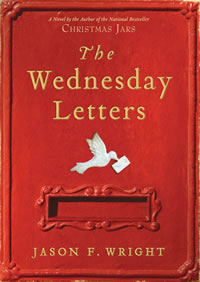
The Wednesday Letters by Jason F. Wright


You know those novels that are about miracles? Not magic, but realistic miracles that happen every day around the world? The kind of miracle where someone needs a second chance in life and gets it?


The Wednesday Letters by Jason F. Wright is that kind of miracle book.


Malcom Cooper ran off to Brazil to escape his problems, but they found him anyway. Malcom's sister, Sammy called him to break the news of their parents' deaths. Malcom immediately made plans to return to his small town roots and be with his siblings for the funeral.


While Malcom is home, the three siblings discover boxes and boxes full of letters from their father to their mother. During his entire married life, Jack wrote to his wife every Wednesday.


The letters illuminate a family secret, and Malcom is not sure it is a secret he can live with.


This is a book about forgiveness, growing up, dreams, expectations, family, love, and making relationships work.


I enjoyed this grown-up book. If you enjoy it, you may also like Christmas Jars by the same author, For One More Day by Mitch Albom, and Letters for Emily by Camron Wright.
Review by Emily, Head Mama of DCR

Hope Was Here by Joan Bauer


Hope was Here by Joan Bauer

“Hope was here.” Those three simple words are how sixteen-year-old Hope marks her presence in a place she is about to leave, and Hope has made her mark in quite a few places as she and Addie, the aunt with whom she lives, travel around the country. The last place they left was Brooklyn, where Addie, a professional cook, was part-owner in the Blue Box Diner. When her business partner skips town with all the diner’s money, Addie and Hope have no choice but to move on. Their destination: Mulhoney, Wisconsin, where a job awaits Addie at the Welcome Stairways Diner.

After the bustle of Brooklyn, Hope doesn’t have high expectations for Mulhoney, feeling sure she will not fit into small town life. But she couldn’t be more wrong. In addition to waiting tables at the diner, Hope gets involved in local politics, helping her boss, G. T. Stoop, run for mayor. In her work on G.T.’s campaign, Hope sees both the best and worst in people, and finds something she has always wanted in an unexpected place. Hope truly is here, in so many ways. This is a heartwarming story, liberally sprinkled with humor. Recommended for age 12 and up.


Review by Lina

Letters from Rapunzel by Sara Lewis Holmes


When "Rapunzel" finds a scrap of a letter in her father's chair addressed to "Box # 5667", she begins an unusual correspondence with one of her father's inspirational muses. Her father, a poet, has been hospitalized with clinical depression. Rapunzel, however, is too young to really understand that diagnosis. All she knows is that her father is under an evil spell. She hopes by writing her father's friend--his poetic guide--that she will somehow break the spell. That she will be rescued from her tower--the horribly yucky after-school Homework Club. And that her father will be rescued from his tower--the hospital. (Or clinic, or institution--I can't remember if the book was too specific in saying where the father was being kept).


Who is Box #5667? A mystery that won't be solved until the final chapters. I certainly won't tell--or even hint. But the correspondence isn't so much about "Box #5667" as it is about a young girl's inner thought life. Her joys. Her concerns. Her worries. She can be funny. She can be entertaining. But she can also be quite serious. She wants to do anything and everything she can to help her father. But there is nothing she can do. School and the homework club are just two of her troubles. Homework--so isn't fun. Teachers--so don't understand her sense of humor. Classmates--don't understand where she's coming from.


Letters from Rapunzel is an enjoyable read. The characters are well-written, and the story is heartfelt.


Readers: 9 and up.


Posted by Becky Laney, regular contributor.

Fever 1793 by Laurie Halse Anderson


Fever 1793 by Laurie Halse Anderson. Set in Philadelphia in 1793, Fever follows the spread of yellow fever within the community through the eyes of a young girl, Mattie (Matilda). Mattie's family owns a coffeehouse. When the epidemic first begins their side of town has not been effected yet. In fact, their business is booming because people are scared to go to certain streets/places in town. But all that changes as the disease makes it way through town. Young, old, man, woman...all are at risk...all are at danger. Mattie is no stranger to danger as she watches her mother get sick. Soon her and her grandfather are packing up what they can and trying to leave town. There is a family in the country where they feel they'll be safer. But are they taking the danger with them into the country? Is any place really 'safe' with an epidemic this size? The novel traces the epidemic from August to December. It is a personal, emotional journey of struggles, sorrows, and endurance.
This book pairs excellently with the nonfiction book An American Plague: The True and Terrifying Story of theYellow Fever Epidemic of 1793 by Jim Murphy.


Recommended Ages: 9 and up.

Posted by Becky Laney, regular reviewer.

Letters for Emily by Camron Wright

Letters for Emily by Camron Wright was one of the best books I read in 2006. I walked into my public library and chatted with the librarians about clean novels they loved. Letters for Emily came highly recommended.

Harry Whitney is dying. Alzheimer's is taking away his mind and life. In his "good" times, Harry types frantically at his computer. His estranged kids think he is crazy, and never cared much for him in the first place.

After Harry dies, they find three exact copies of a book complete with stories and poems by Harry. The collection is called Letters for Emily, as Emily, Harry's granddaughter, was his only true friend at the end of his life.

Each poem/story in the book is a riddle. Each answer is a password for a computer file. Harry's children and grandchild learn a lot about Harry that explains much of his behavior, but more importantly they learn about themselves and the power of forgiveness.

This is one of those books where you laugh one second and cry the next. The structure of the book is fascinating. If you enjoy books by Mitch Albom, Nicholas Sparks (not all his books are Clean Reads), and Richard Paul Evans, you'll like this one, too. I loved it.

Posted by ME, Emily. My personal blog is here.

And look what others have said about this book!

“Clever, heartwarming and heartfelt, LETTERS FOR EMILY is a novel every member of the family should read. I love it!”
– Mary Higgins Clark, #1 New York Times Bestselling Author

“This is an exceptional story, gleaming with goodness and hope.”
– Richard Paul Evans, #1 New York Times Bestselling Author

“Eloquent...powerful and gripping.”
– Publishers Weekly

“...An advice-laced heartwarmer in the tradition of Mitch Albom’s popular Tuesdays with Morrie .”
– The Boston Herald

“This wonderful book is touching, sweet and blessed with a voice that remains long after the last page is turned.”
– Kathy Ashton, Editor, The Inkslinger Book Review

“...A very intelligent, well-crafted and feeling piece. I found it totally absorbing and difficult to lay down. The writing style is full of energy -- the characters real and alive. …A passionately poignant work that touches the human heart. Reading it was an absolute pleasure.”
– Ray Goldrup, Movie and Television Screenwriter

“I loved this book. I absolutely loved it! Telling the story through the letters, the passwords, and the poems was enthralling, wonderful and unique. You can’t imagine how close to my heart it came.…A warm inspirational story which leaves you feeling more grateful for love and family. Chills. Tears. Fabulous!”
– Amanda Dickson, KSL Radio

“Two pages had not passed, and I had already laughed out loud twice and felt the catch of a tear. This is an honest and good-hearted book.”
– Marvin Payne, Actor and Playwright

“Comforting as cocoa, a heartfelt first novel...”
– Kirkus Reviews

Drums, Girls & Dangerous Pie by Jordan Sonnenblick


Jordan Sonnenblick is one my new favorite authors. This past week I read DRUMS, GIRLS & DANGEROUS PIE and I loved it.


Steven is a young teen--an eighth grader--who is about to face the toughest year of his life. In October, his younger brother (5 or 6???) is diagnosed with a serious life-threatening illness: leukemia. Suddenly, Steven's life is out of control. He's expected to behave much like before: go to school, do his homework, take his weekly drum lessons, practice for his All-Star Jazz Band...but he has even more responsibilities to shoulder. Now he has to tend for himself while his mom and brother are out of town a good percentage of the time. He has to deal with the fact that his father is emotionally shutting down and isolating himself from his family. He has to deal with the knowledge that his annoying little brother may not live very long. His brother's requests for games and attention can't be swept away and filed under "bothersome" any more. After facing days and weeks of horrible medical procedures, how can Steven be cruel and refuse to play a couple of games a night? And how can he beat his brother? Shouldn't his brother be allowed to win something at the end of the day. Yes, life is full of changes for Steven.

Drums, Girls & Dangerous Pie is the story of how he copes with those changes and becomes a stronger, more compassionate young man because of it.

Here's a taste of the writing:

"Inside the dance, I found a bunch of my friends standing around in a corner. It suddenly struck me that the two worst social situations in middle school--dances and dodgeball--had a lot in common for guys like me. You go to the gym, stand in a corner as far away from the action as possible, and try not to be seen. Your eyes scan the room for threats--either flying projectiles aimed at your head or girls aimed at mortifying you by getting you out on the floor--and you sweat profusely while standing still. Also,you're wearing clothing that embarrasses you, and you feel like everybody else is better at this game than you are. And in both situations, you desperately hope that some miracle will occur to bring you glory, but you're too scared to attempt to do anything that might actually achieve any recognition. Oh yeah, dances and dodgeball: the two Ds of my middle school nightmares."
From DRUMS, GIRLS & DANGEROUS PIE by Jordan Sonnenblick, p. 94-95


This review was written and submitted by Becky L.
Frequent Contributor
Book Reviews
Miss Becky's Book Reviews


You can read Jordan Sonnenblick's blog here. It will also be added to the sidebar with the other Delicious Author Blogs.


Happy Weekending! And thanks for visiting Clean Reads.